Heavy Industry Solutions
Steel Scrap Handling & Magnetic Separation Systems
Stabilize Input Quality – Protect Critical Equipment – Optimize Operating Costs.
Turning “cheap scrap” into “high-value raw material” through precise engineering.
Is "Cheap Scrap" Costing You More?
Scrap is flexible and economical, but hidden costs arise from impurities. If your plant faces these 6 signs, there is likely a bottleneck in your handling system:
1. Inconsistent Input
Scrap mixed with dirt, plastic, wood, or rubber causes melting instability.
2. Frequent Downtime
Conveyor jams, hopper arching, crusher overloads, and unexpected stops.
3. Material Loss
High ferrous content lost in the waste stream (tailings) reduces recovery rates.
4. Unstable Quality
Melting quality fluctuates due to unwanted mixed metals.
5. High Maintenance
Increased wear on belts, chutes, and bearings leading to higher OpEx.
6. Safety & Environment
Issues with dust, noise, and potential explosion risks from foreign objects.
Automated Separation vs. Manual
Why Upgrade to an Automated System?
“Scrap Filtration” is vastly different from manual sorting. It is a combination of mechanical, electrical, and automation processes designed to separate ferrous materials, recover lost metal, and standardize input size.
- Stable Productivity (Ton/h): Consistent output regardless of shift or operator fatigue.
- High Repeatability: Reduces dependence on human labor and manual errors.
- Better Control: Improved safety and environmental compliance (dust, noise).
- Data Integration: Monitor belt loads, runtime, and jam alerts via PLC/SCADA.
"From precise 3D engineering to robust on-site operation."
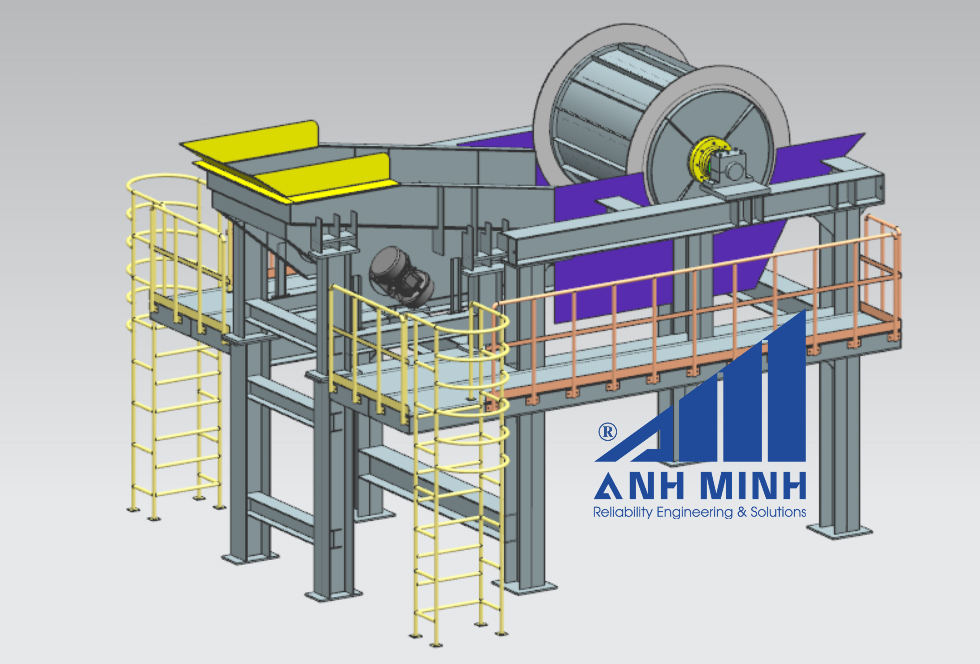
Concept
- Design
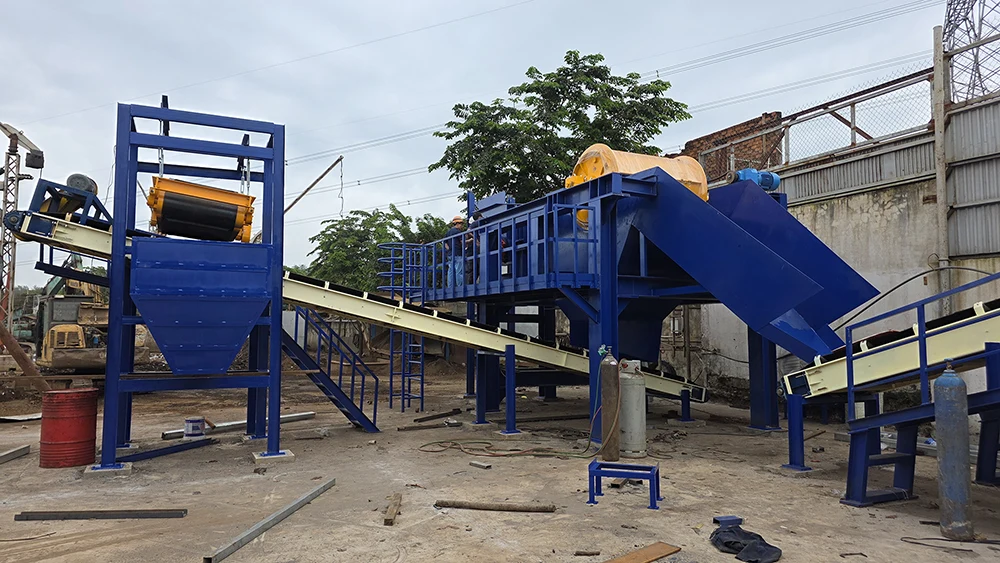
Reality
- Execution
Typical System Configuration
Reception & Feeding
Heavy-duty receiving hoppers and vibrating feeders. Solutions to prevent bridging/arching; optimized conveyor angles and speeds.
Screening & Sizing
Vibrating screens or Trommels to classify size and remove gross impurities, reducing load for downstream separation.
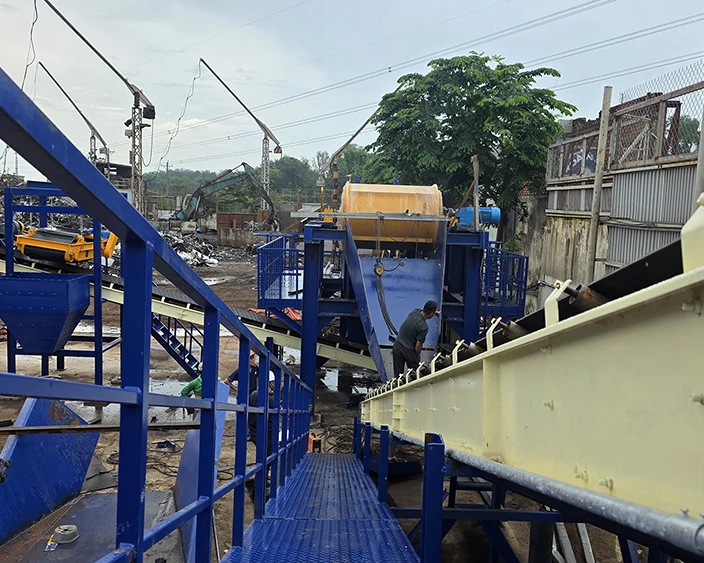
Magnetic Separation
Overband Magnets: Recover ferrous from belt.
Drum Magnets: High efficiency for bulk material.
Magnetic Pulleys: Compact head-pulley separation.
Non-Ferrous & Environment
Optional Aluminum/Copper separation to increase value. Dust suppression (fogging/extraction) and safety guarding.
Heavy Duty
Robust Mechanical Design
Automation
Intelligent Control & Safety
Benefits Measured by Numbers
Stable Quality
Reduced input variance, minimizing production line risks.
High Recovery
Maximized ferrous recovery rate from waste streams.
Asset Protection
Reduced conveyor jams and crusher overloads.
Low Maintenance
Fewer recurring failures, proactive wear part management.
Implementation Process
01
Survey & Diagnose
Assess current receiving, material flow, and bottlenecks.
02
Design & Calculate
Layout, capacity, separation config, safety solutions.
03
System Assembly
Mechanical, structural, electrical control integration.
04
Install & Test
Load testing scenarios, operator training.
05
Accompaniment
Fine-tuning as scrap sources change.
How can Anh Minh help you right now?
If you want to upgrade your scrap classification capacity or fix bottlenecks, we can help with a quick assessment.