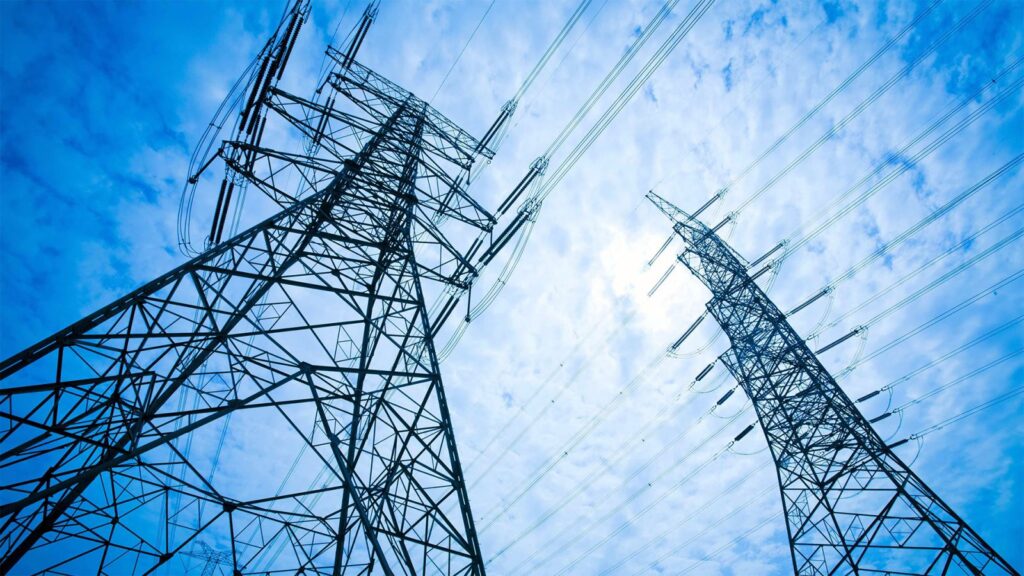
Mr. Ngo Son Hai, Vice President of Vietnam Electricity (EVN), stated that due to power source development being heavily dependent on geographical conditions and primary energy resources, power plants are unevenly distributed across the country.
Furthermore, electricity demand varies significantly between regions. Consequently, in recent years, the Central and Southern power systems have frequently relied on a substantial amount of transmitted power from the North.
According to Mr. Nguyen Duc Ninh, Deputy Director of the National Load Dispatch Center (A0), to ensure power supply for socio-economic development and residential needs, the Group focused on repairing power sources and grids starting from late 2016 through the first quarter of 2017. This ensures the highest level of system availability starting from the second quarter.
“Simultaneously, we are ensuring the transmission capacity of the 500 kV lines, particularly the Ha Tinh – Da Nang and Vung Ang – Da Nang segments, to transfer power from the North to the Central and Southern regions,” Mr. Ninh added.
The power grid managed by Power Transmission Company 3 (PTC3) runs along the South Central and Central Highlands provinces, traversing coastal terrain, high mountains, and marshes. Some areas face drought, floods, and industrial crop cultivation zones that pose risks to right-of-way (ROW) safety. Therefore, the overall power supply situation faces many challenges, especially during this year’s dry season.
Mr. Ho Cong, Deputy Director of PTC3, noted that given this specific terrain, the company’s top priority is monitoring the transmission line corridors.
Specifically, teams assigned to specific routes are tasked with clearing dry grass and forest undergrowth that pose fire hazards. They also address tall trees with canopies that violate safety clearances and monitor segments where locals frequently practice slash-and-burn farming or areas with high forest fire risks. Additionally, safety firebreaks are created for lines in high-risk zones.
From the onset of the dry season, units have focused on clearing vegetation, collecting dry brush into small piles, and conducting controlled burning during scheduled power outages to prevent fire from spreading to adjacent areas.
In tandem with periodic inspections, units conduct public outreach, urging citizens not to burn fields near high-voltage corridors. In sugarcane farming areas beneath the lines, staff coordinate with farmers to collect dried leaves and move them to safe locations.
Furthermore, the Company coordinates with local authorities regarding existing structures and houses within the ROW. They work with 500 kV line security forces, local governments, and residents near 220 kV and 500 kV corridors to track information on forest burning and construction activities near the grid to proactively handle potential issues.
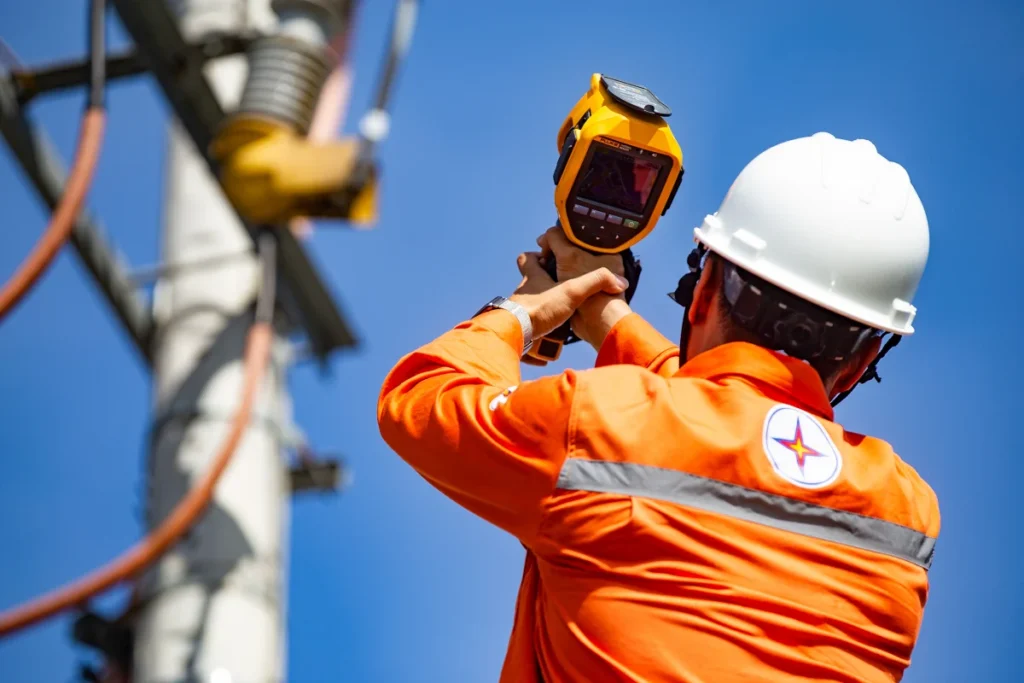
To remain proactive during the dry season, transmission units increase inspections of lines passing through highly polluted areas or regions with sudden weather changes such as high humidity or salt fog. They schedule night inspections and use corocam imaging to detect contaminated insulation and plan for hotline cleaning (cleaning while the line is energized) to ensure safe operation.
In Southern Vietnam, this dry season also sees many 500 kV transformers frequently operating at high loads (85-100%) at the Cau Bong, Tan Dinh, and Song May substations. Several 220/110 kV transformers are overloaded at the Nha Be, Tao Dan, Phu Lam, Thu Duc, Long Binh, Tay Ninh, My Phuoc, Long An, My Tho 2, and Tra Noc substations. Additionally, lines such as the Phu Lam – Vinh Loc branch and the double-circuit Trang Bang – Cu Chi line are operating under overload conditions.
To resolve these issues, Mr. Nguyen Van Hoa, Deputy Director of Power Transmission Company 4 (PTC4), stated that the company has urged project management boards to expedite the commissioning of anti-overload projects. These include a second 900 MVA, 500 kV transformer at Cau Bong; energizing the 220 kV Tan Cang and District 8 substations; and installing second 220 kV transformers at the Tay Ninh, Uyen Hung, and Duc Hoa substations.
Before the dry season, PTC4 units addressed abnormal thermal hotspots to ensure reliable operation, prioritizing the North-South 500 kV line and lines projected to carry high loads.
In addition to preventing forest fires and hazards from kites or metallic fireworks, units frequently patrol key lines near national highways and densely populated areas to prevent ROW violations. Special attention is given to high-load lines such as the 220 kV Thu Duc – Cat Lai, Cu Chi – Trang Bang, Long Bình – Long Thanh, and lines connecting directly to power plants.
EVN has now developed a national power system operational plan for extreme scenarios, such as prolonged heatwaves occurring simultaneously across all three regions, to ensure timely response measures.