Vietnam Electricity (EVN) reports that the national power system is entering a challenging operational phase during the peak dry season months.
The peak of the dry season has always been the most stressful operational period for the national power grid. The national load forecast for the second quarter is approximately 53.2 billion kWh, representing an 11.82% increase compared to the same period last year.
Notably, the North-South 500 kV transmission line will continue to operate under continuous high load. Specifically, the double-circuit segments of Nho Quan – Ha Tinh – Da Nang – Pleiku will carry heavy loads; should a fault occur on one circuit, there is a significant risk of widespread power outages.
Consequently, the National Power Transmission Corporation (EVNNPT) has been implementing various solutions to ensure sufficient electricity for socio-economic development throughout the dry season and for the entirety of 2017.
Current operational data shows that power supply for the South has been secured as the region transitions into the rainy season. However, the North and Central regions have faced consecutive widespread heatwaves, such as those in early June, putting immense pressure on power supply.
The transmission grid managed by Power Transmission Company 2 (PTC2) stretches from Ngang Pass (Quang Binh) to Kon Tum. During this dry season, the company has intensified its monitoring of the operational status and load levels of transformers at the 220 kV Dong Hoi, Thanh My, and 500 kV Da Nang substations. Monitoring also focuses on the 500 kV double-circuit lines (Da Nang – Ha Tinh, Da Nang – Pleiku, Pleiku – Doc Soi) and the 220 kV double-circuit lines (A Vuong, Thanh My – Hoa Khanh, Hoa Khanh – Da Nang).
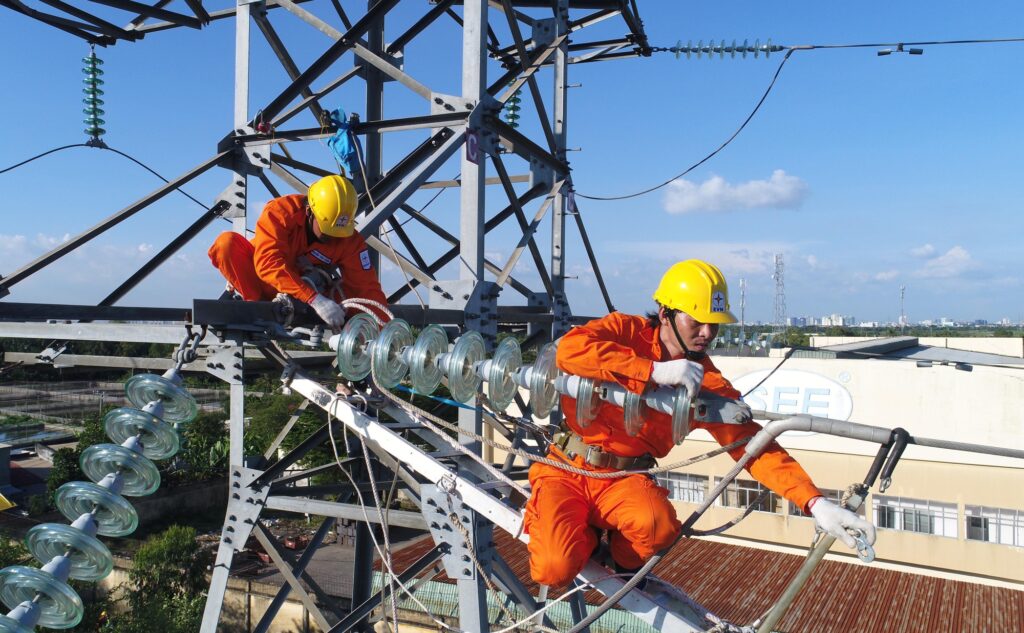
Mr. Tran Thanh Phong, Director of PTC2, stated that in addition to periodic line inspections to identify and resolve defects, units conduct weekly thermal imaging of contact points on lines that frequently operate at full or over capacity. Units also prioritize online insulation cleaning for specific line segments.
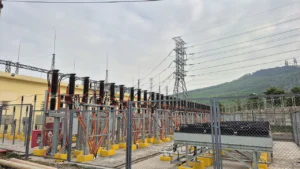
At substations, units have reviewed the status of transformers operating at full or over capacity, as well as equipment with dissolved gas-in-oil levels exceeding regulations, to prevent incidents. Transformer operational modes are monitored daily to avoid overloading.
To address high loads (>70%) on 500 kV transformers at the Hiep Hoa, Thuong Tin, and Pho Noi substations during peak periods, Power Transmission Company 1 (PTC1) has immediately mitigated safety risks for equipment and transformers. Furthermore, comprehensive thermal imaging of all substation equipment was completed before March 31 to ensure supply during the dry season.
PTC1 has compiled a list of transmission lines frequently operating at full or over capacity for special monitoring. Night inspections and corocam imaging are conducted according to regulations to detect contaminated insulation.
For lines in high-pollution areas, measurements are taken at least once a month. Periodic insulation cleaning, clearing of clearance violations, and rectification of defects are carried out promptly.
“We perform weekly periodic inspections and unscheduled intensified checks to detect and prevent incidents early, especially in critical areas with risks of right-of-way violations, forest fires, or slash-and-burn farming, as well as hazards from flying objects like kites or metallic fireworks,” said Director Pham Le Phu.
The Load Dispatch Department and substation shift crews coordinate with Load Dispatch Centers to obtain timely monthly operational updates, notifying dispatchers of the timing, duration, and severity of overloading on lines and transformers at key nodes of the transmission grid.
EVN Vice President Ngo Son Hải noted that upcoming weather trends will impact power supply. Average temperatures across the country from June to July 2017 are expected to be higher than the long-term average, particularly in the North. Consequently, power demand in this region is projected to grow by approximately 9% year-on-year.
Furthermore, Northern Vietnam is home to many large hydropower plants, such as the Da River cascade with a total installed capacity of nearly 6,500 MW, accounting for 16% of the system’s total capacity. According to Mr. Hai, unfavorable hydrological conditions would significantly affect EVN’s ability to ensure power supply during the final months of the dry season.