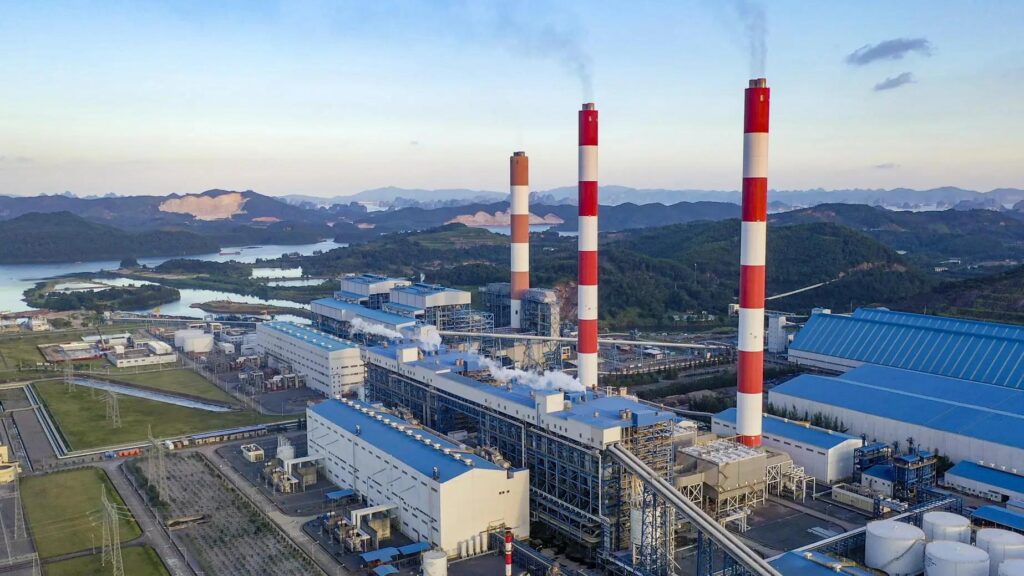
Researching the recovery of ash and slag waste from coal-fired thermal power plants as raw materials for producing high-economic-value products is a matter of great current interest, aimed at mitigating environmental impacts. However, finding the most effective solutions for utilizing ash and slag is no simple task.
Turning Ash and Slag into High-Value Materials
Statistics show that the domestic power generation capacity from coal-fired plants exceeds 5,000MW using domestic anthracite coal, with an annual consumption of approximately 16 million tons. The resulting ash and slag waste amounts to 5.7 million tons. Since 2013, the annual volume of ash and slag from five coal-fired thermal power plants under the Vietnam National Coal-Mineral Industries Holding Corporation Limited (TKV) at full capacity is estimated at 2.8 million tons per year (of which approximately 1.7 million tons is bottom ash). Projections suggest that by 2030, as the country’s total coal-fired thermal power capacity rises to about 77,000MW—leading to a surge in coal consumption to 176 million tons—ash and slag waste will reach 35 million tons per year, releasing a massive amount of SOx into the atmosphere, estimated at 5 million tons annually.
However, ash and slag from thermal power plants can serve as additives in cement and concrete production. Furthermore, they are effectively used as reinforcing binding agents for transport infrastructure, and in the production of unburnt bricks, lightweight concrete, ceiling panels, gypsum walls, and ceramics, with total potential consumption reaching tens of millions of tons per year.
As a researcher pursuing the topic “Economic efficiency of utilizing ash and slag waste from thermal power plants,” Mr. Huynh Nhat Quang from Petrovietnam Engineering Consultancy (PV Engineering) stated: “Ash and slag are wastes from coal-fired power plants; however, they are valuable raw materials for the cement and construction materials industries because they contain the core chemical components that form clinker and cement. If fly ash meets requirements for use as an additive in cement production, it can account for 5-30% of the raw materials, reducing production costs. Using fly ash to replace about 30% of cement in concrete will significantly reduce the required volume of cement while substantially increasing the durability and strength of the structure.”
Globally, developed nations consistently encourage—and sometimes mandate—the use of coal ash and slag from thermal power plants in road construction. For instance, in France, up to 99% of discharged ash and slag is reused, while the figures for Japan and South Korea are 80% and 85%, respectively.
The Coal Ash and Slag Dilemma
Currently, in Vietnam, several facilities for recovering and processing fly ash and producing unburnt bricks from ash and slag have been built and operated near thermal power plants. Notable examples include the Pha Lai Fly Ash Production Plant with 8 fly ash processing lines using flotation technology and a capacity of 40,000 tons/month; the Cao Cuong Fly Ash Processing Plant with a capacity of 80,000 tons/year (using sources from Pha Lai Power Plant); and several other processing workshops under the Son La Hydropower Project Management Board, Pha Lai Concrete Additive Company, and Ninh Binh Thermal Power JSC.
Additionally, utilizing ash and slag as primary raw materials for construction, Song Da Cao Cuong JSC operates an AAC brick production line with a capacity of 200,000m³/year and a dry-mix mortar line with a capacity of 60,000m³/year. The Cao Ngan Thermal Power Company also operates an unburnt brick factory producing 3 million units per year.
For power plants using domestic coal, the ratio of unburnt coal remaining in the ash is very high, around 20-30%. To meet the criteria for cement additives, fly ash must undergo processing to reduce the unburnt carbon content to below 6%.
However, scientists warn that recovering ash and slag is far from simple, as most operating thermal power plants in Vietnam either lack waste recovery systems or have systems with low and inconsistent efficiency. Furthermore, many plants built in the 1960s, such as Ninh Binh, Pha Lai I, and Uong Bi, utilize Pulverized Coal Combustion (PCC) technology, where waste and SOx gases are largely released into the environment.
Additionally, the fuel source for these plants is often low-quality coal with an ash content exceeding 32%, sometimes reaching 45%, resulting in a massive discharge of ash and slag—equivalent to 20-30% of the coal consumed.
According to Mr. Huynh Nhat Quang, Vietnamese anthracite coal used in thermal power plants is characterized by low volatile matter (only 10-15%). Coupled with high ash content in the input coal and low boiler efficiency, the unburnt carbon content in the resulting ash can be as high as 30%. Implementing measures to increase combustion efficiency could lead to poor steam parameters or high NOx emissions.
Projections indicate that by 2020, increasing construction demand will require approximately 42 billion bricks nationwide. Producing this volume through traditional fired-clay methods would consume 60 million tons of coal. Firing bricks in traditional vertical kilns releases toxic CO2 and SO2, severely impacting the environment, human health, and crop yields. To mitigate these environmental effects, the Government has focused on developing the unburnt construction materials industry using raw materials such as thermal power ash and slag, cement, stone dust, and sand.
Recently, the Ministry of Construction proposed that the Government implement incentive policies to mandate coal-fired power plant owners using wet limestone Flue Gas Desulfurization (FGD) to install full gypsum processing equipment that meets standards, ensuring the recovery of materials for the construction industry.
Scientists believe that to solve the coal ash and slag dilemma, thermal power plants must use high-quality coal and upgrade their technology and equipment to improve collection and recycling efficiency. There should be encouragement for R&D and investment in recycling ash and slag into unburnt bricks, lightweight concrete, and insulation or acoustic materials. It is evident that coal resources are finite; if we do not prioritize recycling and waste utilization, humanity will pay a heavy price in the future. Effective and optimal methods for processing and utilizing ash and slag waste are needed immediately!
Ash and slag in coal-fired power plants are formed and discharged in two forms: Fly Ash and Bottom Ash (also known as slag). Scientists warn that discharging ash and slag into the environment will cause pollution to the air, soil, and water sources.